About the project
Around 400,000 young people are unable to find a place in Nepal’s labour market each year. Every day, 2,200 young people leave the country – many through unsafe and irregular migration channels in search of work. Young people from rural areas and marginalised groups, such as the Musahar community within the Madhesi Dalit population, are particularly affected: only 3.9% complete lower secondary education, while more than 35% of girls and young women aged 12 to 22 are already married. Government vocational training programmes are largely inaccessible to these young people due to financial, geographical and structural barriers.
The project therefore focuses on 70 economically disadvantaged young people aged 18 to 24 from rural and marginalised regions of Nepal who are unemployed or underemployed, with women making up at least 50% of participants. Priority is given to school dropouts with no vocational alternatives, survivors of domestic violence and human trafficking seeking economic independence, returnees from unsafe labour migration, and members of the Musahar and other Madhesi Dalit communities from the regions covered by our partner organisation’s Caste Equality Project.

Objectives of the Vocational Training Project in Nepal
Access to High-Quality, Certified Vocational Training
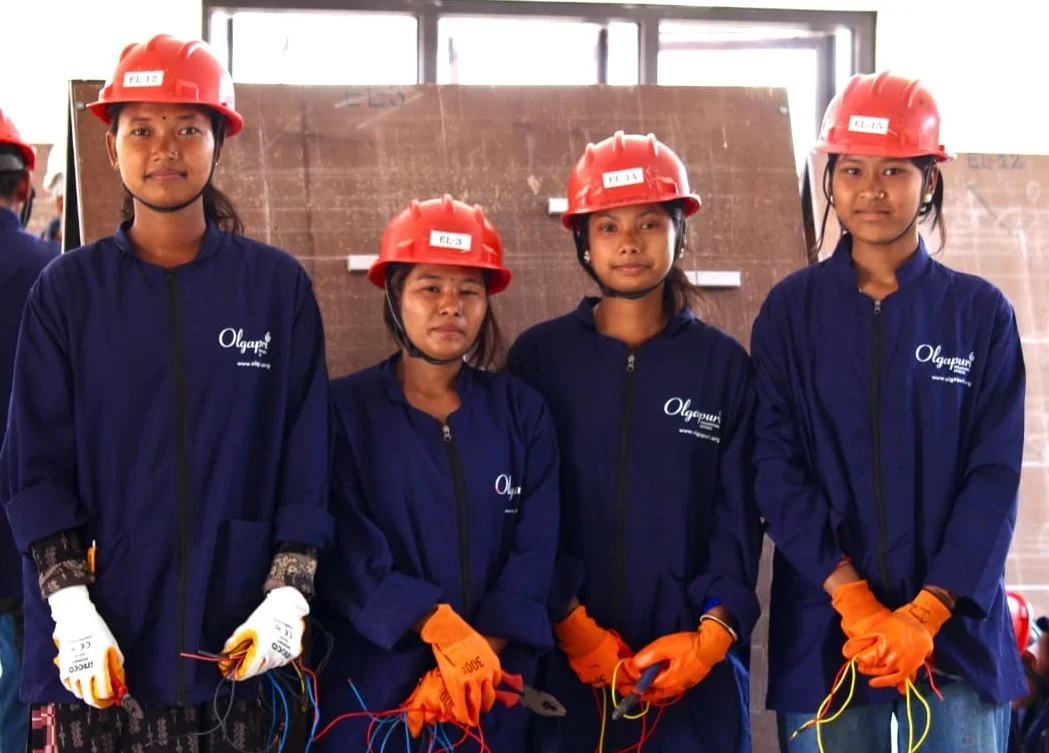
Seventy young people aged 18 to 24 complete practice-oriented, full-time vocational training in three occupational fields at the Nepal Youth Foundation Vocational School: 30 young women in industrial tailoring, 20 young people in electrical technology and 20 in plumbing. All courses follow the national curriculum. Accommodation, meals and travel costs are fully covered by the project. At least 90% of participants are expected to complete the training and receive certification, while 70% will additionally obtain a nationally recognised qualification.
Improved Employment and Income-Generating Opportunities
After completing their training, all graduates receive active support in finding employment through employer networking events, individual job placement and follow-up support for up to six months after graduation. Graduates from the skilled trades receive a starter toolkit to help them become self-employed. In addition, two-day training courses in entrepreneurship and basic business skills are offered.
Our partner organisation maintains a network of more than 200 employers and directly connects graduates with employment opportunities. At least 80% of graduates are expected to find decent work within three months of completing their training and to earn at least the national minimum wage of NPR 19,500 per month within one year.
Strengthened Life Skills and Self-Confidence
As many trainees come from families affected by poverty, have experienced social exclusion and, in some cases, violence, the technical training is complemented by intensive courses on goal setting, decision-making, communication, health and occupational safety. Our partner organisation’s counselling centre also provides psychosocial group support, particularly for young women. Meetings with role models and alumni further enrich the programme. At least 90% of participants are expected to report improved self-efficacy, communication skills and decision-making abilities.
Project Area: Lalitpur, Kathmandu Valley, Nepal Catchment Area: All of Nepal
Frequently Asked Questions
The pilot project runs from March to December 2026. It will also serve to assess the potential for a longer-term collaboration on a regular vocational training project in the years to come.
The training programmes are nationally recognised and qualify participants to take the official CTEVT certification examination – a recognised credential that significantly improves their prospects in the formal labour market. Previous results from our partner organisation demonstrate the programme’s lasting impact: 97% of participants successfully complete their training, and more than 80% are employed within three months of graduation. In industrial tailoring, the employment rate is close to 100%.
Many graduates go on to establish small businesses in their home communities or train other young people themselves, creating local economic cycles that benefit entire communities. Our partner organisation’s strong institutional foundation – including its own school, infrastructure and employer network – helps ensure the long-term continuation of the programme.
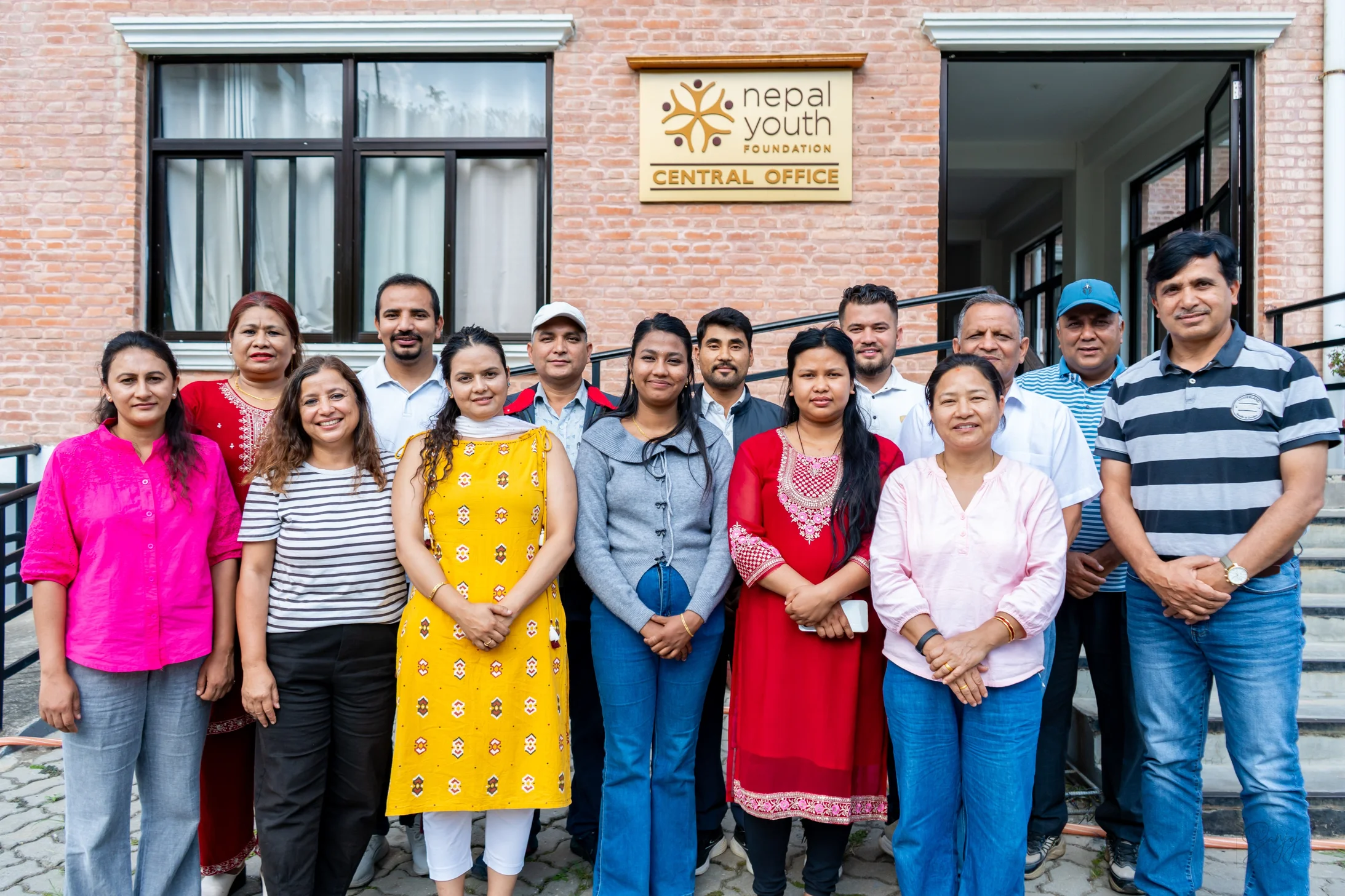
Responsible Local Partner Organisation: Nepal Youth Foundation, a national NGO based in Kathmandu
The partner organisation Nepal Youth Foundation is a Nepalese NGO founded in 1990. Its mission is to provide quality education and vocational training, particularly for disadvantaged young people.